


%20(1).png)
Valuation often signals momentum, not mastery. While big numbers dominate headlines, they reveal little about a company’s ability to scale, defend its position, or compound value over time. In growth-stage investing, outcomes are shaped not by the price paid, but by what the business does after the round is closed.
How Growth-Stage Investors Should Think Beyond Startup Valuations
Valuation has become the dominant signal in today’s startup ecosystem. Every funding announcement is framed around who crossed a milestone, who is approaching one, and which round redefined expectations for an entire sector. These numbers travel fast because they are easy to understand and easy to compare. They create narratives of success, momentum, and inevitability.
But for investors, especially those participating in growth-stage rounds, valuation is only the entry point, not the decision itself. When you are not the lead or anchor investor, pricing is largely predetermined. The real work begins after the valuation is known, when you must answer a far more important question: why does this company deserve capital at this valuation, and what needs to go right from here?
The Cost of Using the Wrong Investor Lens
A significant source of investment mistakes comes from applying the wrong mental framework to the wrong stage of a company. Early-stage investing is inherently speculative. It is driven by belief in founders, in the problem being solved, and in the possibility that a small idea can scale into something meaningful.
Growth-stage investing, by contrast, is about validating that belief with evidence. By this stage, a startup has achieved product-market fit, built a base of paying customers, and shown that it can execute beyond experimentation. Treating a growth-stage company like an early-stage bet often leads investors to over-index on vision and underweight operational reality.
On the other hand, judging it as if it were a mature public company can cause investors to miss the asymmetric upside that still exists at this phase.
From Potential to Proof at the Growth Stage
Once a startup enters the growth phase, the focus shifts decisively from promise to performance. Growth numbers alone are insufficient; what matters is the quality and durability of growth. High retention, repeat usage, and improving unit economics are far more meaningful than short-term spikes driven by aggressive spending.
These indicators reveal whether customers genuinely value the product or are simply responding to incentives. Competition must also be assessed with nuance. The presence of strong incumbents or aggressive new entrants does not automatically weaken an investment case. In many instances, it confirms that the market is large and worth pursuing.
What ultimately differentiates enduring businesses is not the absence of competition, but the presence of clear and defensible differentiation.
Growth-stage investors should consistently reflect on:
- Whether customer demand is organic and repeatable
- Whether differentiation is structural rather than cosmetic
- Whether scale improves the business model instead of straining it
Moats, Scale, and the Reality of Execution
Execution becomes the defining variable as startups move from growth to leadership. Differentiation must evolve into a moat that compounds over time and protects the business as competition intensifies. This moat may come from technology, operational excellence, deep customer relationships, brand trust, or proprietary processes that are difficult to replicate.
At the same time, organisational maturity becomes critical. Founders must transition from hands-on builders to leaders of teams, systems, and culture. Governance, decision-making frameworks, and leadership depth start to matter as much as product innovation.
Growth should increasingly be driven by leverage and scale, not by proportional increases in capital or effort. Burn, therefore, must be viewed in context, as a tool to accelerate durable growth rather than as an isolated risk metric.
Investors should look closely at:
- Evidence of operating leverage and economies of scale
- How thoughtfully capital is deployed to build long-term advantage
- The founder’s appetite for sustained value creation over quick outcomes
Why Startups Cannot Be Judged Like Public Companies
Comparisons between startups and public companies often create confusion rather than clarity. Public companies are built for predictability, steady cash flows, and transparent reporting. Growth-stage startups are built to move quickly, experiment aggressively, and capture markets that are still forming.
Near-term profitability is often sacrificed in service of long-term dominance. Applying public market valuation frameworks to startups too early ignores how private market value is created. In this context, execution quality and the ability to scale matter far more than current earnings.
Execution Over Valuation
Valuation is a static snapshot taken at a moment in time. Execution is an ongoing process that determines whether that snapshot looks justified in hindsight. The strongest investments are rarely those made at the lowest price; they are those made in companies that consistently outperform expectations as they scale.
Financial models and metrics are essential tools, but they are not substitutes for judgment. Understanding how a company thinks, builds, competes, and adapts under pressure is what ultimately separates enduring winners from short-lived stories.
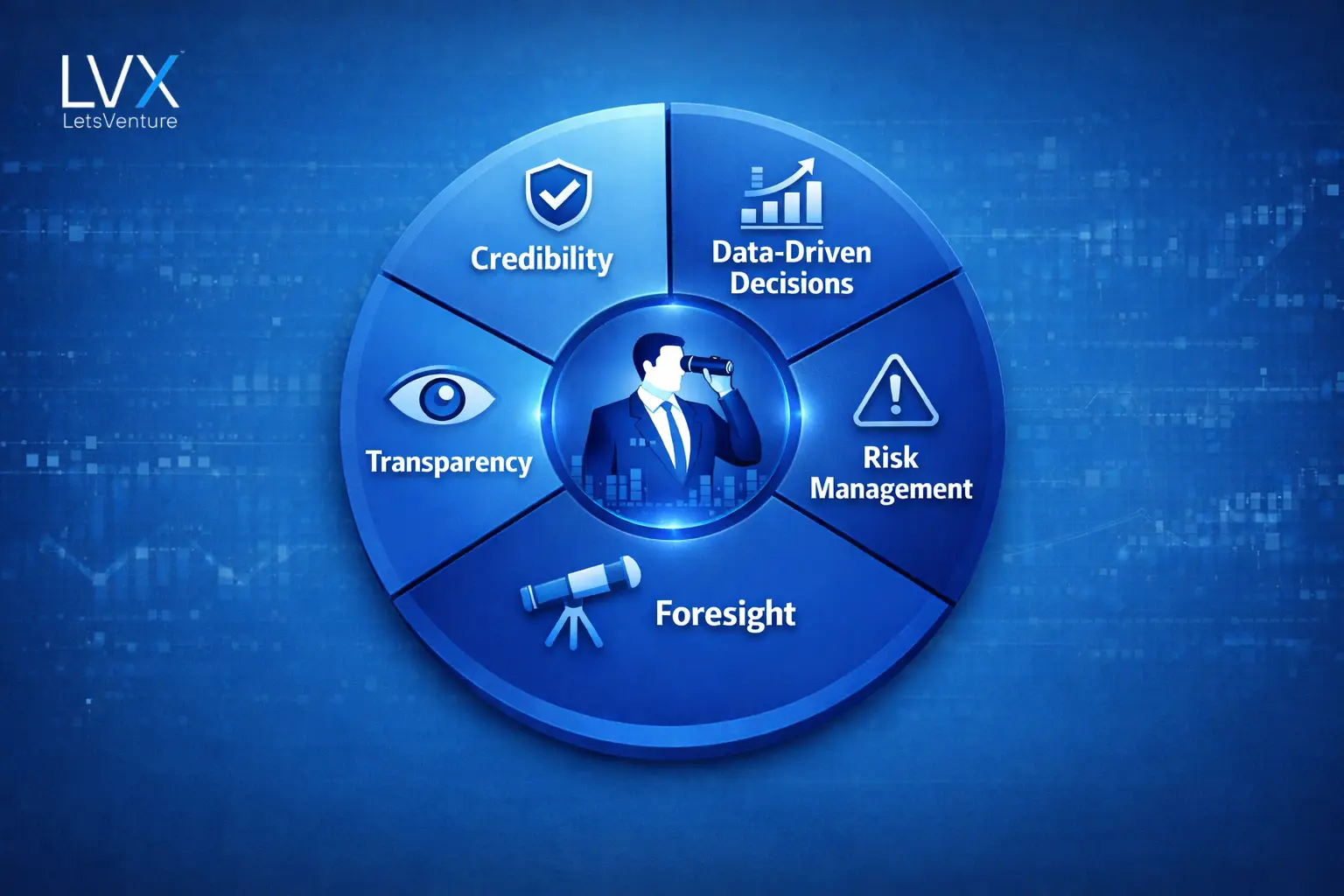
At LVX, we work closely with investors to evaluate growth-stage opportunities through this balanced lens. By combining performance data with deep qualitative insight, we focus on identifying companies where disciplined execution can translate valuation into lasting outcomes and long-term value creation.

.png)


.png)

.png)


.png)
.png)
.png)
.png)